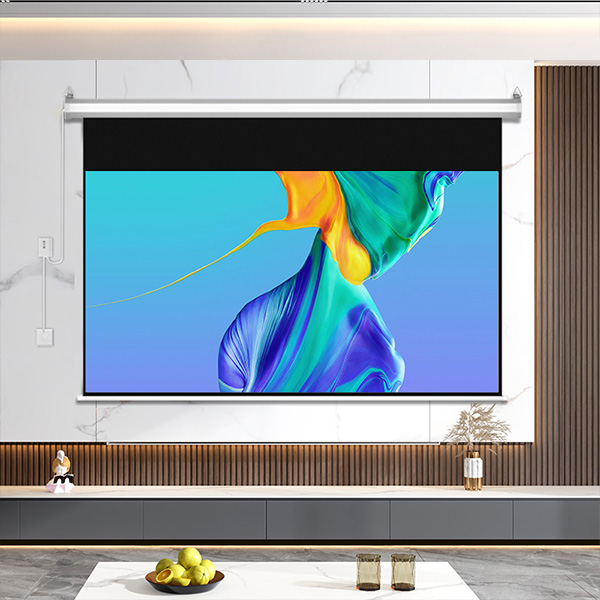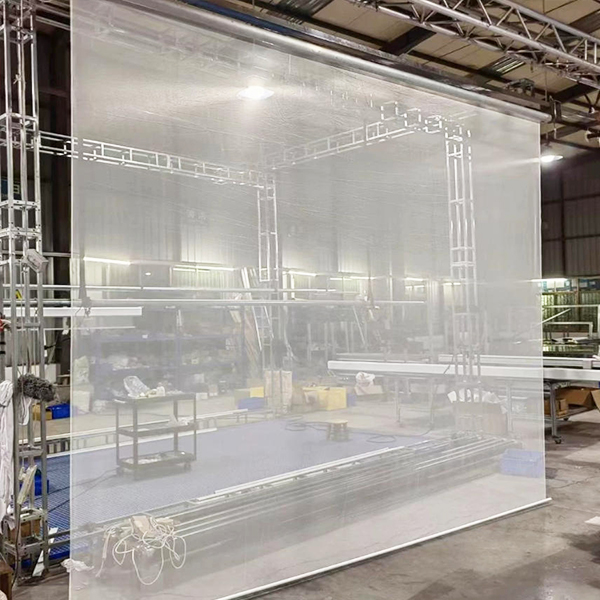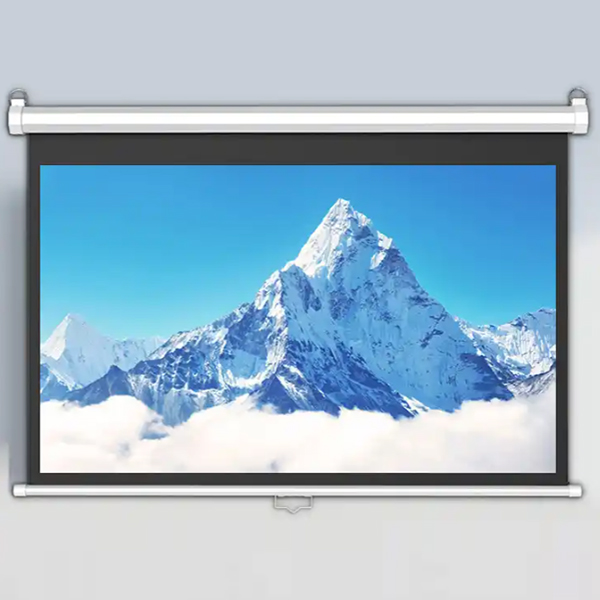

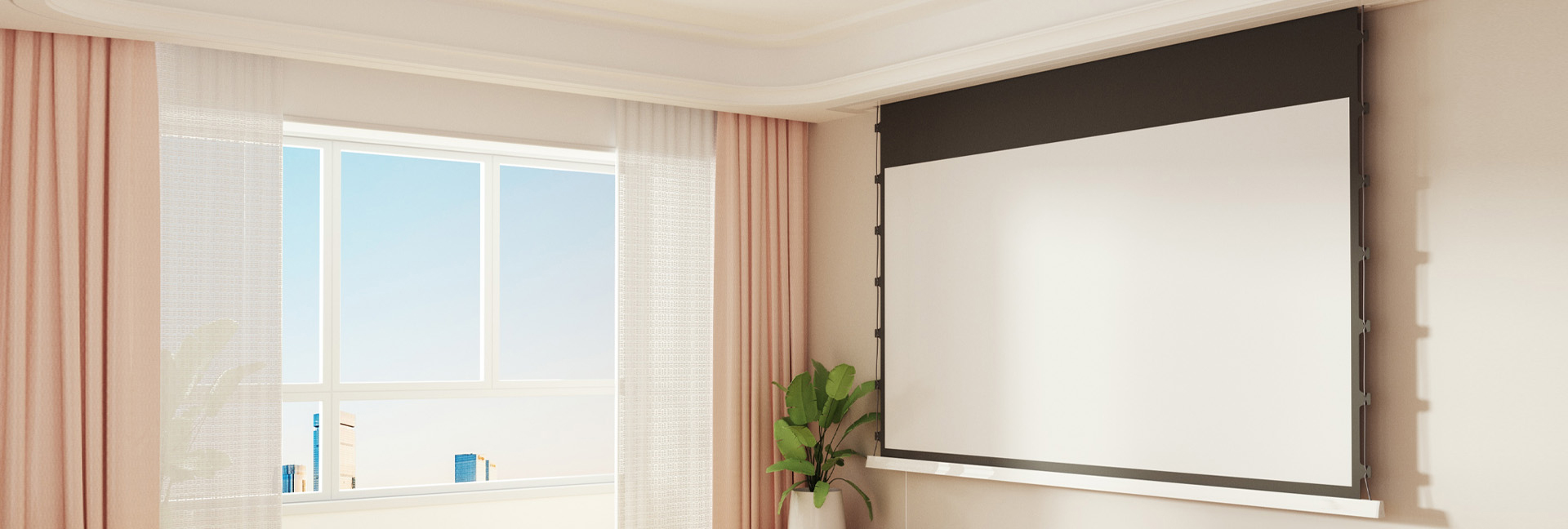
The global projection screen market is maintaining moderate growth, and China’s export volume continues to expand. The main opportunities are concentrated in mid-to-high-end categories such as ALR screens, ultra-short-throw screens, motorized screens, portable screens, and cinema/education screens.
Market Size
Global market estimates vary by definition, but most reports show steady expansion.
One estimate puts the 2026 global projector screen market at about US$48.85 billion, reaching US$64.72 billion by 2033, with a CAGR of about 4.1%.
Another estimate values the 2026 market at about US$11.89 billion, growing to US$20.56 billion by 2030.
A third estimate shows the market growing from US$2.23 billion in 2025 to US$3.50 billion by 2035, at a CAGR of about 4.6%.
These differences mainly come from whether the data covers only projection screens, optical screens, projection equipment, or complete display solutions.
China Export Performance
In the first half of 2026, China’s exports of cinema and other projection screens reached 2.8653 million units, up 32.69% year on year. Export value was US$83 million, up 12.93%.
During the same period, imports were only 6,900 units, down 25.29%, while import value rose 19.89% to US$2.8583 million. This indicates that China mainly exports volume-driven products, while imports are more focused on high-end or specialized screens.
Demand Drivers
Home entertainment: Home cinema, laser TV, and portable projectors continue to drive demand for ALR and UST screens.
Education and corporate: Schools, training centers, and meeting rooms still need fixed-frame, motorized, and portable screens.
Commercial cinema and events: Cinemas, exhibitions, sports bars, and outdoor events support demand for professional screens.
Technology upgrade: 4K/8K projection, ALR, acoustic-transparent, motorized, and smart screens are becoming key selling points.
Key Product Trends
Product Type Foreign Trade Opportunity Notes
Product Type Foreign Trade Opportunity Notes
ALR Screen High Suitable for living rooms, laser TV, and bright meeting rooms
UST Screen Medium-High Requires precise optical structure and high flatness
Motorized Screen Medium Popular in home cinema and corporate use
Portable Screen Medium Benefits from outdoor, camping, and mobile office demand
Fixed Frame Screen Stable Widely used in cinema, home theater, and conference rooms
Cinema & Education Screen Stable Depends on commercial projects and public procurement
Regional Opportunities
North America: Mature home cinema and corporate markets; strong demand for ALR, motorized, and premium screens.
Europe: Education, corporate, and home entertainment remain important; environmental and energy standards matter.
Asia-Pacific: Growth is driven by China, India, Southeast Asia, and digital education.
Latin America, Middle East & Africa: Smaller base but growing potential in commercial, education, and entertainment projects.
Risks and Suggestions
Price competition: Ordinary white plastic and basic fiberglass screens face strong price pressure.
Certification requirements: Buyers may require CE, FCC, RoHS, fire-retardant, or project-specific standards.
Tariff and logistics uncertainty: Trade policy changes can affect cost and delivery time.
Product differentiation: Focus on ALR, UST, motorized, portable, acoustic-transparent, and customized sizes.
Bundled sales: Cooperate with projector, laser TV, and smart home channels to increase export value.
Summary
Projection screen foreign trade is no longer only about low-price volume. The better opportunities lie in optical performance, installation scenarios, certification compliance, brand capability, and channel development.