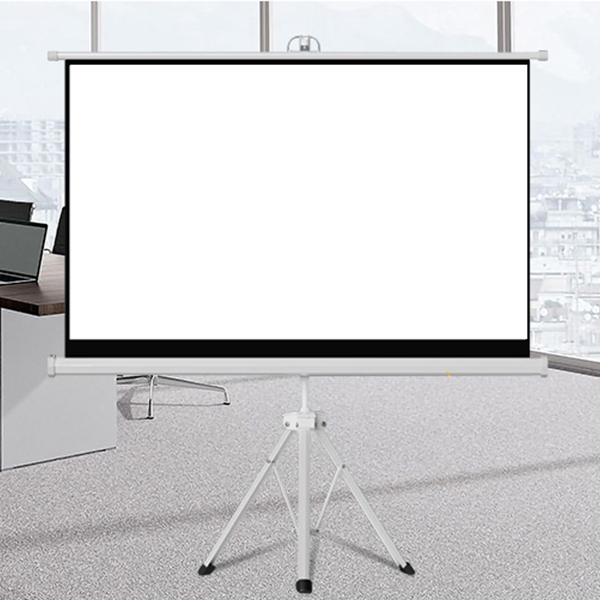

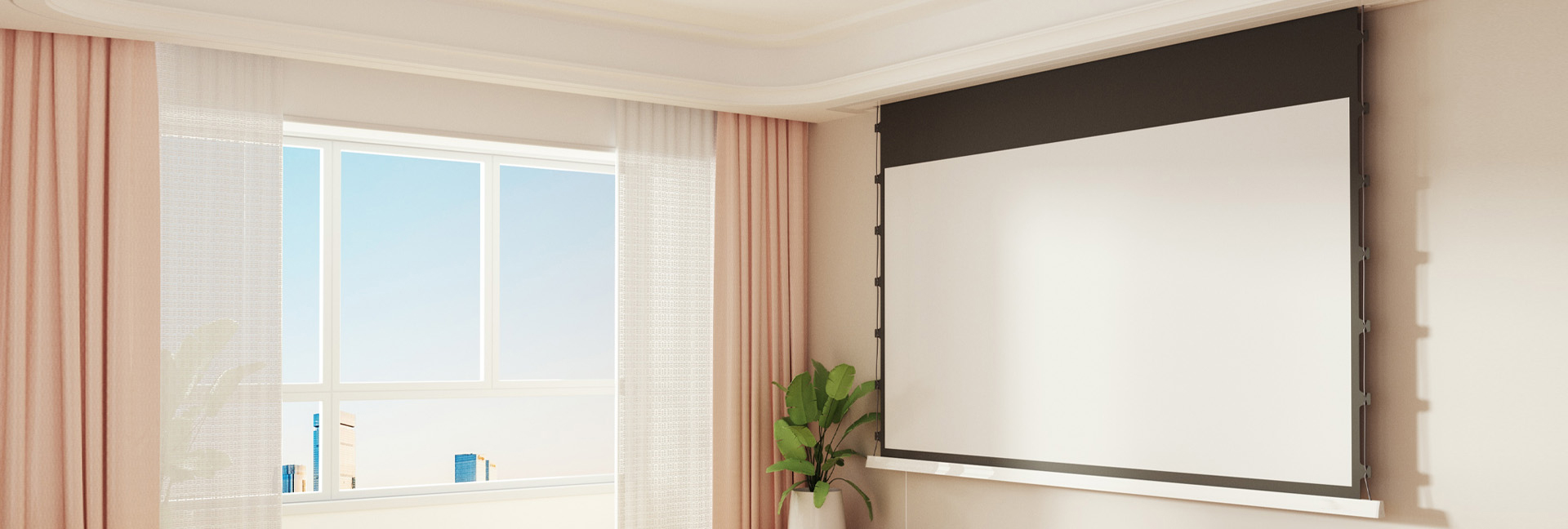
Does the safety of manually operated lift screens urgently need an upgrade? This is a real issue facing many public spaces and commercial venues. With the increasing diversification of indoor space functions, manually operated lift screens are widely used in conference rooms, multi-functional halls, exhibition halls, and educational and training venues to divide space and improve efficiency. However, under long-term, high-frequency use, their structural and operational safety issues are gradually attracting attention.
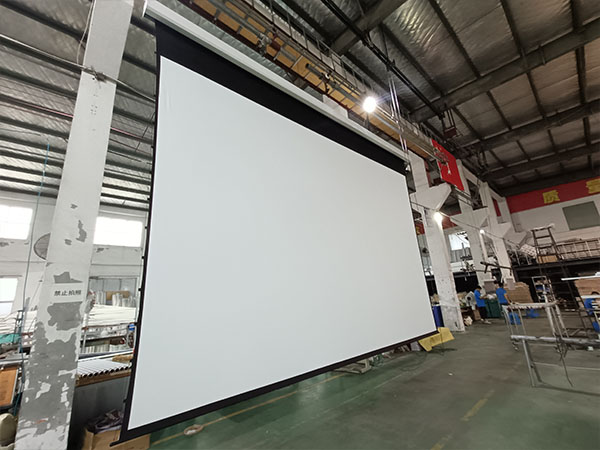
From a structural perspective, traditional manually operated lift screens mostly use steel wire ropes, pulley systems, or track-guided structures for lifting. If maintenance is lacking during long-term operation, issues such as steel wire wear, track misalignment, and loose connections can easily occur. If the load-bearing system becomes unstable, the screen may slide or jam, posing a potential risk to users. Therefore, the strength redundancy design of load-bearing components, the reliability of locking mechanisms, and the fatigue life assessment of the overall structure become important technical indicators for determining whether an upgrade is necessary.
From an operational safety perspective, manual lifting systems rely on human operation to control height and speed. Without limit devices or buffer devices, uneven force or sudden release during lifting may cause instantaneous displacement. Especially in densely populated areas, the risks of misoperation cannot be ignored. Current products have incorporated double locking structures, automatic slow-descent designs, and concealed anti-detachment devices. These improvements significantly reduce the impact of sudden malfunctions.
From a management and maintenance perspective, many organizations often neglect periodic inspections after installation. While manual structures are relatively simple in construction, this does not mean they require no maintenance. A reasonable maintenance system should include cable wear testing, torque verification of fasteners, cleaning and lubrication of guide rails, and overall load-bearing testing. If the equipment has been in service for a long time and lacks complete maintenance records, the necessity for safety upgrades increases significantly.
Furthermore, as building safety regulations become more comprehensive, some early-installed manual lifting screens may not have fully considered current safety standards. With new standards emphasizing fall prevention, pinch prevention, and accidental activation, structural reinforcement or functional modifications to existing equipment have become part of renovation projects in many locations.
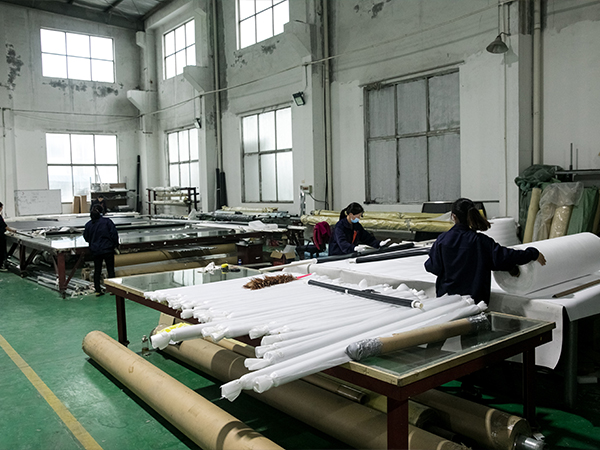
In conclusion, whether manual lifting screens urgently need safety upgrades cannot be generalized but should be systematically evaluated based on equipment usage frequency, installation age, maintenance status, and current regulations. However, it is clear that the safety redundancy design and risk control capabilities of devices that serve as spatial dividers in public spaces should be continuously improved. Rather than reacting passively after problems occur, it is better to optimize and upgrade them in advance at the technical and management levels to ensure stability and controllability during use.