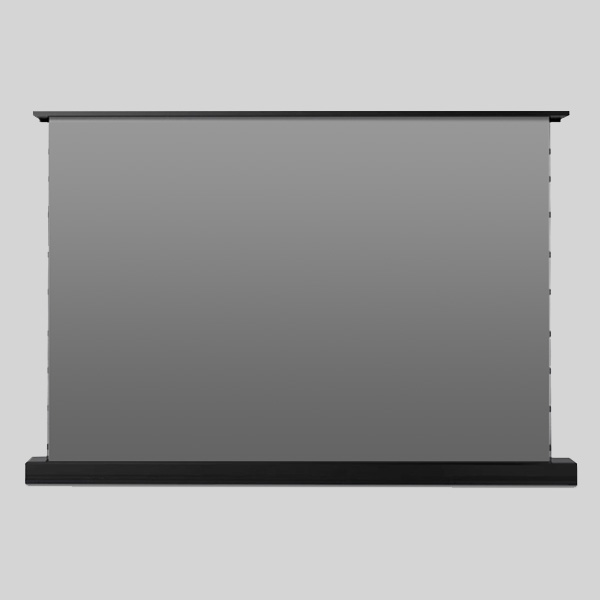

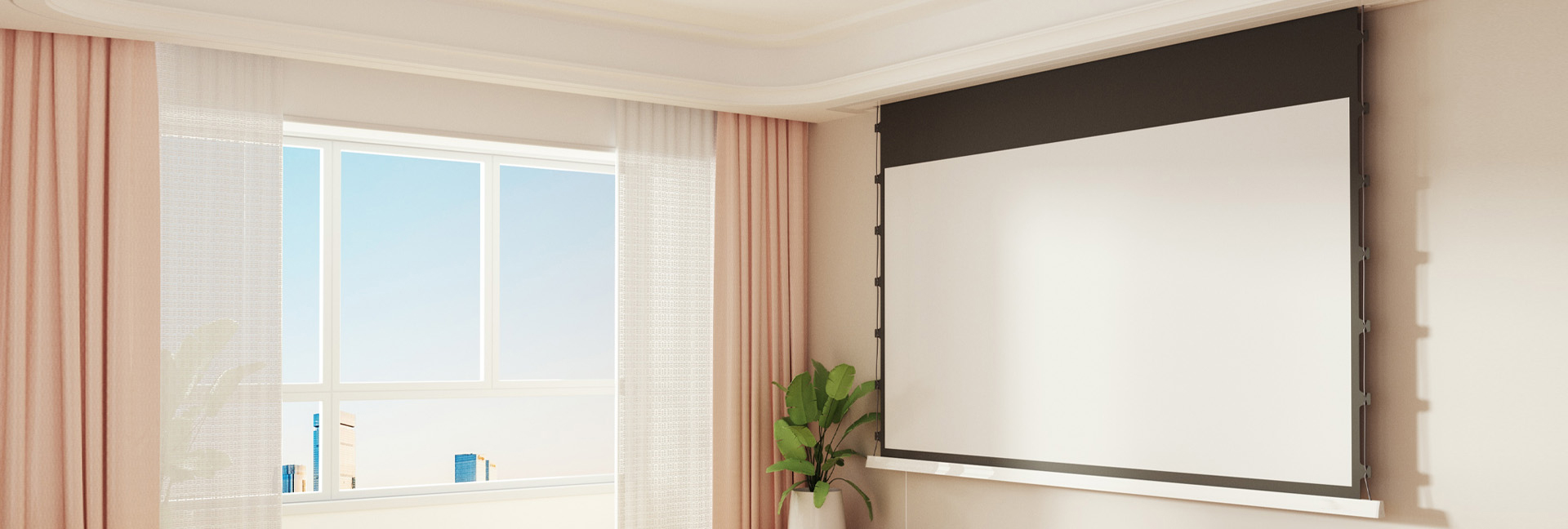
Electric lifting screens are widely used in modern conference rooms, multimedia classrooms, and home theaters. One of the core issues in their structural design is how to ensure the stability and long-term reliability of the overall structure while bearing the weight of the screen itself and the operational load. To address the two key indicators of "weight load capacity" and "operational stability", it is usually necessary to consider multiple aspects, including structural design, motor system, transmission mechanism, and installation method.
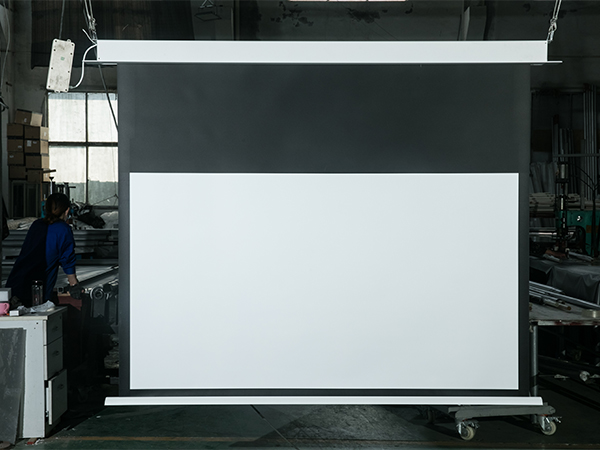
Firstly, in terms of structural load-bearing capacity, the shell of an electric lifting curtain is usually made of high-strength aluminum alloy or cold-rolled steel plate. Aluminum alloy has a high specific strength, reducing overall weight while ensuring rigidity, making it suitable for small to medium-sized screens; while cold-rolled steel plate provides higher bending resistance in large screen systems. The shell often incorporates reinforcing ribs to improve torsional stiffness and deformation resistance, preventing bending or sagging after prolonged suspension. For extra-large screens, a segmented shell structure is often used, distributing the load through modular splicing.
The screen's roller (spindle) is a crucial component for bearing the weight. To avoid axis misalignment or mid-section sagging due to its own weight, high-quality products typically use thickened seamless steel pipes or high-precision aluminum pipes, with wall thickness optimized according to the curtain width. For larger spans, increased diameter or additional internal support structures enhance bending resistance. The coaxiality control of the roll is also very important. If the processing accuracy is insufficient, it will cause swaying during operation and affect the flatness of the screen.
Secondly, the drive system directly affects load-bearing capacity and operational stability. The motor's rated torque must match the total weight of the curtain, with a safety margin. Insufficient torque can lead to difficulty starting or vibration during operation; excessive torque may cause unnecessary impact on the internal transmission structure. The common configuration is a tubular motor, which is installed coaxially with the reel, reducing intermediate transmission links and thus reducing mechanical errors and energy loss. In high-end systems, an overload protection module is also configured to automatically cut off power when the load is abnormal, thus avoiding mechanical damage.
The precision of the transmission mechanism also determines stability. Most motorized lifting screens employ a gear reduction structure, converting the high-speed motor output into a low-speed, high-torque output through a reducer, ensuring smooth lifting. The gear meshing precision, lubrication condition, and bearing quality directly affect noise and vibration control. High-quality bearings can effectively reduce radial runout, allowing the curtain to maintain a straight trajectory during lifting and lowering, and reducing lateral swaying.
Regarding operational stability control, the limit system is crucial. Motorized lifting screens are typically equipped with vertical travel limit devices for precise control of the unfolding and retracting positions. Mechanical limit structures are simple and reliable, while electronic limit structures offer higher positioning accuracy and can be fine-tuned via a control module. Precise positioning not only prevents overwinding or overunwinding, but also reduces the impact load on the motor at its extreme positions.
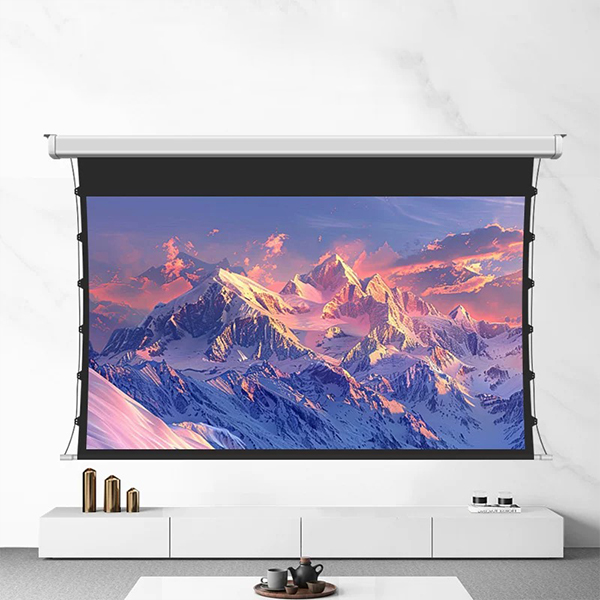
Screen tension control is another key factor in maintaining flatness and stability. For ordinary roll-up screens, the weight of the base rod provides basic tension; while tension screen systems continuously apply lateral tension through side cables or elastic tension devices to prevent ripples. A reasonable tension distribution can reduce the swaying of the screen during raising and lowering, and improve the stability of the visual effect.
The installation method has a decisive impact on the overall load-bearing capacity and stability. The hoisting structure must be designed in accordance with the building's load-bearing conditions. For concrete structures, expansion bolts or chemical anchors of matching specifications should be used; for steel or wood structures, appropriate connectors should be selected. The number and distribution of installation points must conform to the principles of stress analysis to avoid excessive stress at a single point, which could lead to shell deformation. For large curtains, multi-point fixing is recommended to distribute the load and improve vibration resistance.
Furthermore, long-term operational stability also depends on regular maintenance. This includes checking for loose fasteners, lubricating transmission components, and detecting abnormal motor operating current. Timely troubleshooting of potential faults can effectively extend the equipment's service life and maintain operational accuracy.
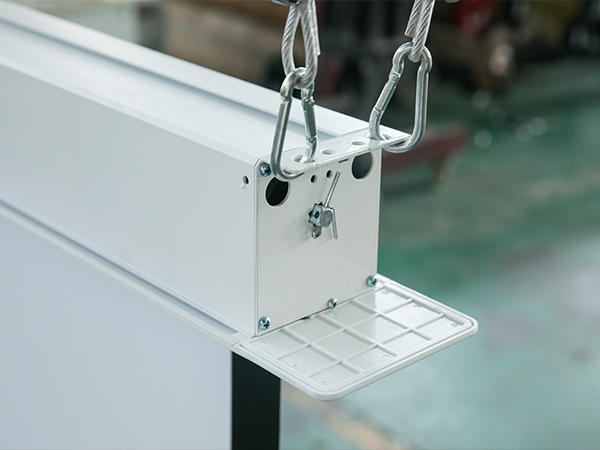
Overall, the ability of electric lifting curtains to cope with weight and maintain stability relies on the coordinated efforts of structural rigidity design, a precise drive system, reasonable transmission configuration, and scientific installation methods. Only through rigorous control in all aspects of design, manufacturing, and installation can stable and reliable operation be achieved.